Library
Browse
Latest messages
2,328 messages
 20m
20mRaising Our Children For God (5 of 7) - Zac Poonen
Zac Poonen · May 21
 12m
12mRaising Our Children For God (4 of 7) - Zac Poonen
Zac Poonen · May 21
 17m
17mRaising Our Children For God (3 of 7) - Zac Poonen
Zac Poonen · May 21
 10m
10mRaising Our Children For God (2 of 7) - Zac Poonen
Zac Poonen · May 21
 19m
19mRaising Our Children For God (1 of 7) - Zac Poonen
Zac Poonen · May 21
 37m
37mThe Cross At The Centre Of Your Marriage - Zac Poonen
Zac Poonen · May 21
 21m
21mReceiving Children In Jesus' Name - Zac Poonen
Zac Poonen · May 20
 1h 4m
1h 4mBEGINNING THE CHRISTIAN LIFE ARIGHT (8 of 8) - Zac Poonen
Zac Poonen · May 19
 1h 8m
1h 8mBEGINNING THE CHRISTIAN LIFE ARIGHT (7 of 8) - Zac Poonen
Zac Poonen · May 19
 1h 2m
1h 2mBEGINNING THE CHRISTIAN LIFE ARIGHT (6 of 8) - Zac Poonen
Zac Poonen · May 19
 1h 0m
1h 0mBEGINNING THE CHRISTIAN LIFE ARIGHT (5 of 8) - Zac Poonen
Zac Poonen · May 19
 1h 4m
1h 4mBEGINNING THE CHRISTIAN LIFE ARIGHT (4 of 8) - Zac Poonen
Zac Poonen · May 19
 1h 1m
1h 1mBEGINNING THE CHRISTIAN LIFE ARIGHT | The Imparted Righteousness Of Christ - Zac Poonen (3 of 8)
Zac Poonen · May 19
 58m
58mBEGINNING THE CHRISTIAN LIFE ARIGHT | Justification By Faith - Zac Poonen (2 of 8)
Zac Poonen · May 19
 1h 6m
1h 6mBEGINNING THE CHRISTIAN LIFE ARIGHT | Four Foundational Truths - Zac Poonen (1 of 8)
Zac Poonen · May 19
 1h 0m
1h 0mReverence For God - Zac Poonen
Zac Poonen · May 10
 57m
57mEverything Outside Of Christ Is Rubbish - Zac Poonen
Zac Poonen · May 10
 58m
58mHow Our Joy Can Be Full - Zac Poonen
Zac Poonen · May 10
 59m
59mBeing A Godly Father - Zac Poonen
Zac Poonen · May 10
 49m
49mSoulish Or Spiritual - Zac Poonen
Zac Poonen · May 10
 58m
58m9.Our Work For God - Zac Poonen
Zac Poonen · May 9
 58m
58m8.Our Walk With God - Zac Poonen
Zac Poonen · May 9
 58m
58m7.Our Worship Of God - Zac Poonen
Zac Poonen · May 9
 57m
57m5.Building Our Home And The Church - Zac Poonen
Zac Poonen · May 9
August 6 | Daily Devotion | The Tree Of Law And The Tree Of Life | Zac Poonen
Zac Poonen · 9m · CFC Daily Devotions
This devotion contrasts the tree of law with the tree of life, exploring how living by legalistic rules differs from living in the Spirit. Zac Poonen teaches that true spiritual life comes not from external commandments but from an intimate relationship with God through the Spirit.
20mCFC India
Raising Our Children For God (5 of 7) - Zac Poonen
Zac Poonen · May 21, 2014 · 20m
The central message is the profound responsibility parents, especially fathers, have to teach their children the ways of the Lord so they can place their confidence in God and not forget God's works. This teaching must encompass scripture, the works of God throughout history, and even recording personal miracles to create a legacy of faith. The speaker emphasizes starting this instruction early and maintaining a consistent spiritual lineage of faith across generations.
12mCFC India
Raising Our Children For God (4 of 7) - Zac Poonen
Zac Poonen · May 21, 2014 · 12m
The sermon emphasizes that every child is a gift from God, and parents must view raising children as training them to be spiritual warriors against Satan, not just preparing them for earthly battles. Drawing from Psalm 127, the speaker urges parents to take responsibility for sharpening their children's faith by guarding their media consumption and daily influences. Ultimately, the goal is to raise children who will not be ashamed when confronted by their enemies.
17mCFC India
Raising Our Children For God (3 of 7) - Zac Poonen
Zac Poonen · May 21, 2014 · 17m
The speaker discusses the spiritual challenges facing Christians in the last days, noting that disobedience to parents is a growing issue. He emphasizes that parents' primary calling is not merely teaching practical skills, but rather modeling and explaining what God is like to their children. This modeling—through attitude toward people versus material things—is how children learn to see God, which requires being filled with the Holy Spirit.
10mCFC India
Raising Our Children For God (2 of 7) - Zac Poonen
Zac Poonen · May 21, 2014 · 10m
The central message is that raising children for God requires parents to see their children as beautiful gifts from God, regardless of external appearances or societal standards. Furthermore, parents must raise them with unwavering faith, not fearing the corrupt world, and must combine discipline with compassion while teaching them the fear of God so they reject the world's allure of honor, sin, and money.
19mCFC India
Raising Our Children For God (1 of 7) - Zac Poonen
Zac Poonen · May 21, 2014 · 19m
The speaker emphasizes that Christian life requires manifesting God's truth through one's actions, which is a higher standard than in the Old Covenant. He stresses that a person's life testimony—demonstrating that they sought God's kingdom first—is what truly matters, more than human opinion. Regarding parenting, he cites Proverbs 22:6, urging parents to diligently train their children in the way they should go, and points to Genesis 18:19, noting that God chose Abraham specifically so he could *command* his descendants to keep the Lord's way.
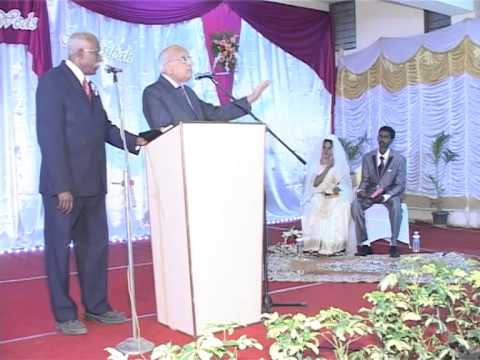
37mCFC India
transcribingThe Cross At The Centre Of Your Marriage - Zac Poonen
Zac Poonen · May 21, 2014 · 37m
This message emphasizes that the cross of Christ must be the central focus of a Christian marriage. True marital strength and unity are found not in worldly compromises, but in the shared commitment to Christ's sacrifice. The couple must continually crucify their own selfish desires to live together in Christ.
21mCFC India
Receiving Children In Jesus' Name - Zac Poonen
Zac Poonen · May 20, 2014 · 21m
The sermon discusses two ways to receive Christ into one's life: by receiving an apostle, or by becoming like a little child. The speaker emphasizes that true conversion requires adopting the childlike qualities of helplessness, humility, and dependence on God, rather than self-sufficiency. Furthermore, the message extends to parents, urging them to receive their children in Jesus' name, accepting them unconditionally, and warning against causing their children to stumble through ungodly behavior.
1h 4mCFC India
BEGINNING THE CHRISTIAN LIFE ARIGHT (8 of 8) - Zac Poonen
Zac Poonen · May 19, 2014 · 1h 4m
This message continues a series on foundational Christian truths, focusing on the Sermon on the Mount. The speaker emphasizes that following Jesus requires walking a narrow way, which demands self-denial, contrasting it with an easy Christian life. He stresses that true discipleship involves embodying the virtues listed in the Beatitudes, and that believers should rejoice when persecuted for righteousness rather than seeking sympathy. Ultimately, the message calls for genuine conversion and consistent commitment to the narrow path.
1h 8mCFC India
BEGINNING THE CHRISTIAN LIFE ARIGHT (7 of 8) - Zac Poonen
Zac Poonen · May 19, 2014 · 1h 8m
The speaker emphasizes that Christian service must be founded not on perceived need, but on the authority of Christ, as stated in Matthew 28:18. He contrasts acting out of need with acting on Christ's command, warning that the former leads to frustration and murmuring. True ministry success comes from submitting to Christ's authority, which protects the believer from opposition. The core message is to balance seeing the need (looking on the fields) with doing the will of God (praying for workers), rather than rushing out based on human reasoning.
1h 2mCFC India
BEGINNING THE CHRISTIAN LIFE ARIGHT (6 of 8) - Zac Poonen
Zac Poonen · May 19, 2014 · 1h 2m
The speaker emphasizes that foundational Christian truths—such as repentance, faith, and the meaning of baptism—must be continually taught to new and unreached people. He stresses the importance of understanding justification by faith as the foundation, while also warning against spiritual complacency regarding God's holiness. The core message for discipleship is that it requires mastering the basics, as neglecting these foundational conditions will undermine the ability to live out the commands of Christ.
1h 0mCFC India
transcribingBEGINNING THE CHRISTIAN LIFE ARIGHT (5 of 8) - Zac Poonen
Zac Poonen · May 19, 2014 · 1h 0m
This session focuses on the ongoing journey of discipleship, which is presented as a continuous process. The speaker emphasizes that true Christian living involves a commitment to following Christ's teachings and lifestyle. It serves as a guide for those who are actively working to grow in their faith.
1h 4mCFC India
transcribingBEGINNING THE CHRISTIAN LIFE ARIGHT (4 of 8) - Zac Poonen
Zac Poonen · May 19, 2014 · 1h 4m
This session focuses on the crucial step of knowing both God the Father and Jesus Christ. The speaker emphasizes that true Christian life involves a deep, personal relationship with both divine persons. Understanding who God is and who Jesus is is foundational to spiritual growth.
1h 1mCFC India
BEGINNING THE CHRISTIAN LIFE ARIGHT | The Imparted Righteousness Of Christ - Zac Poonen (3 of 8)
Zac Poonen · May 19, 2014 · 1h 1m
The sermon distinguishes between imputed righteousness (being declared righteous by Christ's work) and imparted righteousness (the ongoing process of living righteously by the Holy Spirit). While forgiveness is necessary, it is insufficient; believers must actively pursue holiness and mercy to avoid spiritual pride. True Christian life requires balancing the truth of imputed righteousness with the daily choice to live according to God's will, which manifests in one's relationships and actions.
58mCFC India
BEGINNING THE CHRISTIAN LIFE ARIGHT | Justification By Faith - Zac Poonen (2 of 8)
Zac Poonen · May 19, 2014 · 58m
The speaker emphasizes the necessity of constantly teaching foundational biblical truths, as churches need repetition for new members. He draws from John 8:32, teaching that knowing the truth sets one free, specifically from the slavery of conscious sin, not just physical bondage. He stresses that Jesus's name means 'Savior' from sin, not merely 'forgiver,' and warns against being deceived by teachings that focus on worldly matters or financial gain over true spiritual freedom.
1h 6mCFC India
BEGINNING THE CHRISTIAN LIFE ARIGHT | Four Foundational Truths - Zac Poonen (1 of 8)
Zac Poonen · May 19, 2014 · 1h 6m
The speaker outlines four foundational truths for new Christians: repentance, faith, water baptism, and receiving the Holy Spirit. He emphasizes that true repentance means turning away from earthly concerns and focusing on the Kingdom of Heaven, citing John the Baptist's message. He warns that many people mistake mere religious activity or belief in 'faith' for genuine repentance, which requires a fundamental shift in priorities.
1h 0mCFC India
Reverence For God - Zac Poonen
Zac Poonen · May 10, 2014 · 1h 0m
The speaker argues that the Book of Job was likely written before Genesis because it details events unconnected to the Abrahamic lineage, suggesting it predates the time when God began dealing only with Israel. He emphasizes that God's initial focus in scripture is on the character of an individual—a godly man or woman—rather than a nation. Furthermore, he stresses that spirituality is independent of wealth, social class, or physical attributes, as exemplified by Job, who was both rich and deeply spiritual.
57mCFC India
Everything Outside Of Christ Is Rubbish - Zac Poonen
Zac Poonen · May 10, 2014 · 57m
The central message is that everything apart from Christ—including personal achievements, wealth, adherence to the law, or perceived goodness—is worthless ('rubbish') when measured against God's righteousness. Paul urges believers to realize that their own righteousness is insufficient, as it is like a filthy rag. True Christian experience comes from understanding and accepting that salvation and acceptance are solely based on God's righteousness received through faith in Christ.
58mCFC India
How Our Joy Can Be Full - Zac Poonen
Zac Poonen · May 10, 2014 · 58m
The speaker emphasizes that the core message of 1 John is eternal life and fellowship with the Father, warning against worshipping anything other than this true God, such as material prosperity or physical healing. He argues that true, unending joy—the mark of those pursuing eternal life—is superior to worldly achievements or even legalistic righteousness. This full joy is the result of focusing on the eternal relationship with God.
59mCFC India
Being A Godly Father - Zac Poonen
Zac Poonen · May 10, 2014 · 59m
The sermon emphasizes the profound responsibility fathers have in revealing God the Father to their children, as they are the primary source of early understanding. Drawing from Abraham's example, a godly father must teach his children to obey God's commands, mirroring Abraham's discipline and Isaac's ultimate obedience. Conversely, the failure of Eli's sons demonstrates how poor leadership and moral decay can corrupt a family's spiritual life.
49mCFC India
Soulish Or Spiritual - Zac Poonen
Zac Poonen · May 10, 2014 · 49m
The speaker distinguishes between three aspects of humanity—spirit, soul, and body—arguing that many Christians mistakenly live only in their 'soul' rather than the 'spirit.' He uses scripture, particularly 1 Thessalonians 5:23 and Hebrews 4:12, to emphasize that true spiritual maturity requires penetrating the division between soul and spirit through God's Word. The message culminates by comparing the human being to the Tabernacle, where the most holy place represents the spirit, showing that God dwells in the deepest parts of us.
58mCFC India
9.Our Work For God - Zac Poonen
Zac Poonen · May 9, 2014 · 58m
Our service to God must flow directly from our worship and walk with Him, avoiding the extremes of neglecting service or neglecting worship. Drawing from John 17:4, the central message is that we glorify God by completing the specific work He has assigned to us. Just as every part of the body has a necessary function, every member of the Body of Christ has a role to fulfill, regardless of whether it is visible or brings public honor.
58mCFC India
8.Our Walk With God - Zac Poonen
Zac Poonen · May 9, 2014 · 58m
True service to God must flow from a genuine walk with Him, not merely from intellectual knowledge. The speaker warns that focusing on doctrine or knowledge (the letter) can be deadly, contrasting this with allowing the life of Jesus to be the guiding light. Ultimately, Christian service is measured by faithfulness in the little things, and the prerequisite for serving God is being free from sin.
58mCFC India
7.Our Worship Of God - Zac Poonen
Zac Poonen · May 9, 2014 · 58m
The central message is that true Christian service must flow as an overflow from genuine worship of God, not the other way around. The speaker emphasizes that worship must always precede service, citing Jesus' teaching to the devil and the pattern of 'worship and serve.' Furthermore, he teaches that God dwells not in the mind or emotions, but in the deepest part of man—the spirit.
57mCFC India
5.Building Our Home And The Church - Zac Poonen
Zac Poonen · May 9, 2014 · 57m
The central message is that true Christianity focuses on inner reality rather than outward appearance, contrasting the superficiality of 'dead works' with the deep transformation provided by grace through Christ. The speaker emphasizes that believers must guard against legalism, which focuses on external rules, and instead cultivate an inner life characterized by love, humility, and a desire for spiritual unity in all relationships, including marriage.