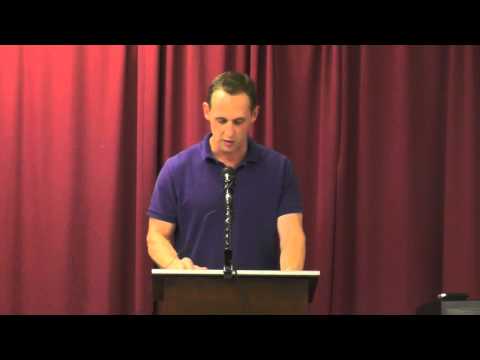
Speaker: Jeremy Utley
Title: Rejoicing in weakness
Date: 10-04-2015
Our Goal as Christians is this: To be an exact reflection of Jesus, the Son of God (Romans 8:29)
We do this individually by growing in purity in our personal lives (1 John 3:2-3)
We do this corporately by becoming fully functioning members of a local Church (Ephesians 4:11-16)
Summary
The central message is that our weakness is not a deficit but rather the necessary condition for God's power and glory to be displayed. Drawing from Paul's writings, the speaker emphasizes that when we are weak, we are actually strong in Christ, allowing us to rejoice in our limitations. True faith involves not just accepting this truth intellectually, but actively expecting and praising God for His strength to manifest even before we fully see the fulfillment of His promises.
Outline
The message in plain words, in the order it unfolds. Select a time to jump the video to that moment.
Recognizing personal weaknessThe speaker shares his conviction about weakness, defining it not as sin but as human limitation, tiredness, and an awareness of the flesh.
Why rejoice in weakness?Instead of wanting to conquer or get over weakness, the speaker notes that Paul spoke about rejoicing in his weakness as part of being made complete.2 Corinthians 13:9
Weakness ensures God gets the gloryPaul explains that we have this treasure in earthen vessels so that the surpassing greatness of the power belongs to God rather than ourselves.2 Corinthians 4:7
Power perfected in weaknessPaul states that he is well content with weaknesses because when he is weak, then he is strong, and Christ's power is perfected in weakness.
Growing in faith for God's powerThe speaker realizes he needs to grow in faith, expecting God's power to work in his weakness rather than only after it has passed.
Expecting God to moveFaith requires more than mental acceptance; it should produce a firm expectation that God will supply strength in the moment of weakness.
Weakness as God's designWeakness is God's design for imparting His strength, protecting us as we humbly submit to His designated pattern.
Responding with prayer instead of discouragementWhen aware of weakness, the proper response is not discouragement, but crying out to God to fulfill His promise that His strength is perfected then.
Rejoicing in the awareness of weaknessIf we truly expect God to perform what He promised, we can praise Him and rejoice in our awareness of weakness.
Praising in fact versus praising in faithWhile praising God in fact happens after strength is given, praising Him in faith happens right in the moment of weakness and belief.
Blessed are those who have not seen and still praiseDrawing on the principle of blessing for those who do not see yet believe, the speaker wants to rejoice and praise God even before the promise is fulfilled.
Refusing to withhold praiseThe speaker concludes that withholding praise is unprofitable, choosing instead to rejoice in faith knowing that in weakness he is strong.
Speaker: Jeremy Utley
Title: Rejoicing in weakness
Date: 10-04-2015
Our Goal as Christians is this: To be an exact reflection of Jesus, the Son of God (Romans 8:29)
We do this individually by growing in purity in our personal lives (1 John 3:2-3)
We do this corporately by becoming fully functioning members of a local Church (Ephesians 4:11-16)
Summary
The central message is that our weakness is not a deficit but rather the necessary condition for God's power and glory to be displayed. Drawing from Paul's writings, the speaker emphasizes that when we are weak, we are actually strong in Christ, allowing us to rejoice in our limitations. True faith involves not just accepting this truth intellectually, but actively expecting and praising God for His strength to manifest even before we fully see the fulfillment of His promises.
Outline
The message in plain words, in the order it unfolds. Select a time to jump the video to that moment.
Recognizing personal weaknessThe speaker shares his conviction about weakness, defining it not as sin but as human limitation, tiredness, and an awareness of the flesh.
Why rejoice in weakness?Instead of wanting to conquer or get over weakness, the speaker notes that Paul spoke about rejoicing in his weakness as part of being made complete.2 Corinthians 13:9
Weakness ensures God gets the gloryPaul explains that we have this treasure in earthen vessels so that the surpassing greatness of the power belongs to God rather than ourselves.2 Corinthians 4:7
Power perfected in weaknessPaul states that he is well content with weaknesses because when he is weak, then he is strong, and Christ's power is perfected in weakness.
Growing in faith for God's powerThe speaker realizes he needs to grow in faith, expecting God's power to work in his weakness rather than only after it has passed.
Expecting God to moveFaith requires more than mental acceptance; it should produce a firm expectation that God will supply strength in the moment of weakness.
Weakness as God's designWeakness is God's design for imparting His strength, protecting us as we humbly submit to His designated pattern.
Responding with prayer instead of discouragementWhen aware of weakness, the proper response is not discouragement, but crying out to God to fulfill His promise that His strength is perfected then.
Rejoicing in the awareness of weaknessIf we truly expect God to perform what He promised, we can praise Him and rejoice in our awareness of weakness.
Praising in fact versus praising in faithWhile praising God in fact happens after strength is given, praising Him in faith happens right in the moment of weakness and belief.
Blessed are those who have not seen and still praiseDrawing on the principle of blessing for those who do not see yet believe, the speaker wants to rejoice and praise God even before the promise is fulfilled.
Refusing to withhold praiseThe speaker concludes that withholding praise is unprofitable, choosing instead to rejoice in faith knowing that in weakness he is strong.