Find a message
Search
Search titles, summaries, and transcripts.
Top 256 matches for “holiness”
 7m
7mJeremy Utley - The Promise Has Not Passed You By
Jeremy Utley · Feb 13
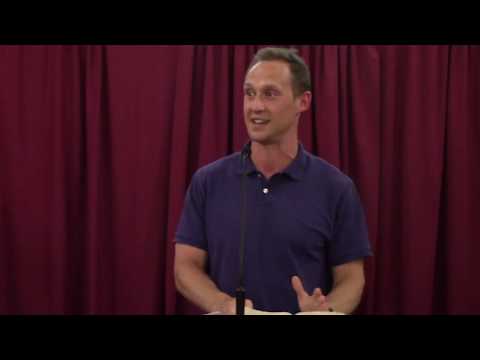 22m
22mJeremy Utley - Valuing the Ministry of Encouragement
Jeremy Utley · Jul 15
 18m
18mJeremy Utley - Growing To Maturity As Children Of God
Jeremy Utley · Nov 7
 10m
10mJeremy Utley - Counting our strengths as loss
Jeremy Utley · Oct 12
 8m
8mJeremy Utley - Rejoicing in weakness
Jeremy Utley · Oct 5
 30m
30mJeremy Utley - My Biggest Problem As A Christian
Jeremy Utley · Aug 10
 12m
12mJeremy Utley - Faith that Jesus can see
Jeremy Utley · Oct 25
 15m
15mJeremy Utley - Dealing With Life's Disappointments As A Disciple
Jeremy Utley · Feb 23
 14m
14mJeremy Utley - "What Should I Share in the Church Meeting?"
Jeremy Utley · Dec 16
 20m
20mJeremy Utley - Redefining "Good Days" And "Bad Days"
Jeremy Utley · Jan 21
 21m
21mJeremy Utley - Guard Against The Two G's
Jeremy Utley · Jul 11
 8m
8mJeremy Utley - A Brief Testimony of God's Help
Jeremy Utley · Feb 16
 14m
14mJeremy Utley - Don't Just Kiss God's Promises
Jeremy Utley · Jul 20
 20m
20mJeremy Utley - Two Ways Satan Deceives Wholehearted Disciples
Jeremy Utley · Apr 26
 14m
14mJeremy Utley - Don't Take Issue With Any of the Lord's Dealings
Jeremy Utley · Jul 21
 8m
8mJeremy Utley - The Cup And The Sword
Jeremy Utley · Apr 15
256 matches
for “holiness” · Jeremy Utley
Jeremy Utley - The Promise Has Not Passed You By
Jeremy Utley · Feb 13, 2018 · 7m · NCCF Church
The central message is that believers must actively grasp and live in the promises and doctrines they have heard, rather than letting them remain mere theology. The speaker encourages the audience not to be discouraged if they feel they haven't yet experienced a promised blessing, drawing parallels from Abraham's faith in Romans 4 and Genesis 15. Ultimately, the call is to respond to God's voice today with faith, believing that the promises are not passed by and can be credited to us as righteousness.
Jeremy Utley - Valuing the Ministry of Encouragement
Jeremy Utley · Jul 15, 2019 · 22m · NCCF Church
The speaker argues that the greatest danger to believers is not material need, but the subtle danger of unbelief, which he compares to a lurking lion. He emphasizes that the primary ministry appointed by God to combat this danger is mutual encouragement, urging believers to encourage one another daily. He warns that 'discouragement' is often a euphemism for unbelief, and that everyone must take this ministry seriously, especially within their own families.
Jeremy Utley - Growing To Maturity As Children Of God
Jeremy Utley · Nov 7, 2016 · 18m · NCCF Church
True maturity in the Christian life progresses beyond simply being a son or daughter, or even being a soldier for Christ, to embracing the heart of a servant. The speaker distinguishes between a 'service mindset,' which focuses on activity and checking off tasks, and a 'servant heart,' which is a continuous, voluntary position of lowliness. This servant heart is demonstrated by proactively seeking out tasks that others avoid, making it a constant determination of mind rather than just an act of service.
Jeremy Utley - Counting our strengths as loss
Jeremy Utley · Oct 12, 2015 · 10m · NCCF Church
The speaker discusses the spiritual danger of becoming proud due to success or compliments, using the example of King Uzziah. He emphasizes that strength itself is not the problem, but the resulting pride is. Drawing from Paul's Philippians 3, the core message is to count all personal strengths and achievements as 'loss' for the sake of Christ, ensuring that all ability is acknowledged as a gift from God to prevent spiritual stumbling.
Jeremy Utley - Rejoicing in weakness
Jeremy Utley · Oct 5, 2015 · 8m · NCCF Church
The central message is that our weakness is not a deficit but rather the necessary condition for God's power and glory to be displayed. Drawing from Paul's writings, the speaker emphasizes that when we are weak, we are actually strong in Christ, allowing us to rejoice in our limitations. True faith involves not just accepting this truth intellectually, but actively expecting and praising God for His strength to manifest even before we fully see the fulfillment of His promises.
Jeremy Utley - My Biggest Problem As A Christian
Jeremy Utley · Aug 10, 2020 · 30m · NCCF Church
The speaker uses the biblical example of Kiriath Arba, which was renamed Hebron after a great victory by Caleb, to warn that spiritual victories are not permanent without vigilance. He argues that if believers become complacent, the enemy (the 'giants') can reclaim areas of life that God has already given victory in. The central message is a call to remain watchful, diligent, and obedient to keep the path of righteousness growing brighter.
Jeremy Utley - Faith that Jesus can see
Jeremy Utley · Oct 25, 2015 · 12m · NCCF Church
The central message is the importance of demonstrating a visible faith that Jesus can see, which is characterized by persistent crying out to God. The speaker draws parallels between the paralytic's faith, the widow's persistent pleas, and the need to proactively cry out to God, overcoming the fear of not being heard. Ultimately, true faith is built through the consistent practice of crying out, trusting in God's promise to answer.
Jeremy Utley - Dealing With Life's Disappointments As A Disciple
Jeremy Utley · Feb 23, 2022 · 15m · NCCF Church
Disappointment is a natural part of the Christian life, and a disciple's response should be to reset their hope completely on the grace found in Jesus Christ. When disappointment or temptation returns, it is not a sign of failure but an opportunity to obey again. True transformation into Christ's likeness requires diligently practicing the fundamentals of faith, much like an athlete mastering their basic skills.
Jeremy Utley - "What Should I Share in the Church Meeting?"
Jeremy Utley · Dec 16, 2020 · 14m · NCCF Church
The speaker advises that when preparing to share at a church meeting, one must resist the temptation to share what sounds clever or intellectually stimulating. Instead, the focus should be on what Christ has truly accomplished in the speaker's life. A key test is to ask what has quenched the speaker's own spiritual thirst and provided comfort, mirroring the principle that one must first receive living water from Jesus to be able to give it to others.
Jeremy Utley - Redefining "Good Days" And "Bad Days"
Jeremy Utley · Jan 21, 2019 · 20m · NCCF Church
The speaker shares a personal testimony about what he calls the 'worst day' of 2019, which was ironically a day filled with seemingly good activities. The realization that he went through the day feeling 'just fine' and not consciously depending on the Lord was the true failure. He emphasizes that true Christian living requires a constant awareness of needing God, even when things appear easy, and this realization prompted a need to repent.
Jeremy Utley - Guard Against The Two G's
Jeremy Utley · Jul 11, 2016 · 21m · NCCF Church
The central message is that growing in the fear of the Lord requires our affections to reflect God's, meaning we must hate evil, pride, and perverted speech. The speaker specifically warns against the 'two G's'—gossip and grumbling—as these are forms of perverted speech that distract from disciplined living. He urges listeners to guard their mouths by keeping their thoughts in their minds, contrasting this with the tendency to talk about others when there is nothing productive to do.
Jeremy Utley - A Brief Testimony of God's Help
Jeremy Utley · Feb 16, 2022 · 8m · NCCF Church
The speaker shares a testimony about realizing that life's true sustenance is not found in material abundance or even free time, but solely in a living connection with Jesus Christ. He draws from scripture, particularly Luke 12:15, to warn against all forms of greed, even the seemingly minor desire for downtime. The central message is to find contentment and identity entirely in Christ, recognizing that all circumstances—busy or free—are opportunities to rely on His strength.
Jeremy Utley - Don't Just Kiss God's Promises
Jeremy Utley · Jul 20, 2017 · 14m · NCCF Church
The central message is the necessity of actively clinging to God's promises rather than merely acknowledging them. The speaker uses the contrast between Orpah and Ruth to illustrate this, noting that while Orpah returned to her own people, Ruth remained devoted to Naomi and her God. He warns that the enemy's tactic is not outright doubt, but a subtle tendency to move away from God's promises, which is functionally the same as doubting them.
Jeremy Utley - Two Ways Satan Deceives Wholehearted Disciples
Jeremy Utley · Apr 26, 2017 · 20m · NCCF Church
The speaker discusses two primary ways Satan deceives wholehearted disciples, drawing parallels from Joshua's victories and the Gibeonites' deception. The first deception is the temptation to do as much good as possible, which can lead Christians to focus on their own extensive to-do lists rather than solely on what God has specifically prepared for them. True discipleship requires a posture of listening to Jesus's teaching rather than being overwhelmed by the world's perceived needs.
Jeremy Utley - Don't Take Issue With Any of the Lord's Dealings
Jeremy Utley · Jul 21, 2021 · 14m · NCCF Church
The central message is to accept all of God's dealings without grumbling or disputing, remembering that taking issue with God's plan is a sign of pride that hinders receiving grace. Instead of wishing for different circumstances—whether concerning oneself, others, or situations—one must gain a revelation to see every challenge as a divinely appointed pathway for God's glory and personal growth in Christ.
Jeremy Utley - The Cup And The Sword
Jeremy Utley · Apr 15, 2020 · 8m · NCCF Church
The central message is that to effectively share the 'cup of salvation' with others, one must first be willing to accept whatever the Lord sends, even if it is painful. The speaker draws a parallel between Jesus in the Garden of Gethsemane and Peter drawing a sword; just as Jesus was called to drink the cup, the believer must put away the 'sword' of self-defense, justification, and resistance. Only by accepting the Father's will can one minister the salvation to others.